Showing posts with label Yogyakarta. Show all posts

October 31, 2010

Borobudur Temple

Borobudur Temple from side

Borobudur is the largest Buddhist temple in the 9th century measuring 123 x 123 meters. Borobudur was completed centuries before Angkor Wat in Cambodia. This Buddhist temple has 1460 relief panels and 504 Buddha effigies in the complex. Millions of people are yearning to visit the buildings included in this World Wonder Heritages.


Borobudur was built by King Samaratungga, one of the kings of Old Mataram Kingdom, Dynasty descendant dynasty. Based Kayumwungan inscription, an Indonesian named Hudaya Kandahjaya revealed that Borobudur is a place of worship was completed on 26 May 824, almost a hundred years from the time the construction. Architects who contributed to build this temple according to a story passed down through generations named Gunadharma.

October 19, 2010

Ancient Volcano Mountain Nglanggeran


This area is an area that litologinya prepared by old volcanic material and has a beautiful landscape and the geology is very unique and of high scientific value. From the results of existing research and reference, otherwise Mountain Nglanggeran is Ancient Volcano. We've often heard and seen pictures of human Purba, well as whether the Ancient Volcano? See the beauty and panorama nature is at the location of this place. Boulder towering buildings and malls such as that used to be an active volcano (60 million years ago) now can we sit sipping fresh air as he took some photographs.

There Joglo building (Hall Joglo Kalisong) at the entrance and when we stepped streets trails for hiking, so there are 3 simple view post buildings of low height, medium to top of the mountain. Green rug that lay at the time looking down when we saw the fields, gardens, and buildings tower and various television stations which is quite a lot, increase natural beauty. This location is very suitable for rock climbing, tracking, cruise tours out bond, makrab, and camping.

Water Castle


Formerly Tamansari was a recreation garden or a resting house for the Sultan and Family. The other resting houses including Warungboto, Manukberi, Ambarbingun, and Ambarrukmo functioned for the vacation and meditation for the royal family. The other function is used as hiding place for royal family to defend against the enemy assault.
Tamansari is located about 2 km south of Yogyakarta Palace. Built by Portuguese architect in European aquatic construction adorned with Javanese Symbolize ornaments. Tamansari was built in the Sultan Hamengku Buwono I period in the end of XVII Century. Tamansari not only just a recreation, but it's also a compound of bathing pool, canals, rooms and extremerly large swimming pool (if the canals opened).

Imogiri

Imogiri Gate 


Imogiri (also Imagiri) is a royal graveyard complex in Yogyakarta, in south-central Java, Indonesia, as well as a modern village located near the graveyard in Bantul regency. Imogiri is a traditional resting place for the royalty of central Java, including many rulers of the Sultanate of Mataram and of the current houses of Surakarta and Yogyakarta Sultanate. The name Imagiri is derived from Sanskrit Himagiri, which means 'mountain of snow'. The latter is another name for Himalaya.

The Royal Graveyard that preceded was Kota Gede. The graveyard was constructed by Sultan Agung of Mataram in the later years of his reign, probably in the 1640s. The graveyard is a significant pilgrimage ziarah site, particularly on significant dates in the Javanese calendar (such as Satu Suro, New Year's Day), and the Islamic calendar.

Kalasan Temple


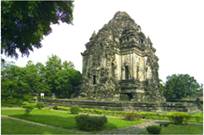
Kalasan temple or Candi Kalasan, also known as Candi Kalibening, is an 8th century Buddhist temple in Indonesia. It is located 13 km east of Yogyakarta on the way to Prambanan temple, on the south side of the main road 'Jalan Solo' between Yogyakarta and Surakarta.

According to a Kalasan inscription dated 778 AD, written in Sanskrit using Pranagari script, the temple was erected by the will of Guru Sang Raja Sailendravamçatilaka (the Jewel of Sailendra family) that succeed to persuade Maharaja Tejapurnapana Panangkaran (in other part of the inscription also called as Kariyana Panangkaran) to construct a holy building for the goddess (boddhisattvadevi) Tara and also build a vihara (monastery) for buddhist monks from Sailendra family's realm. Panangkaran awarded the Kalaça village to sangha (buddhist monastic community).[1]. According to the date of this inscription, Kalasan temple is the oldest among temples built in the Prambanan Plain.

Parang Tritis Beach


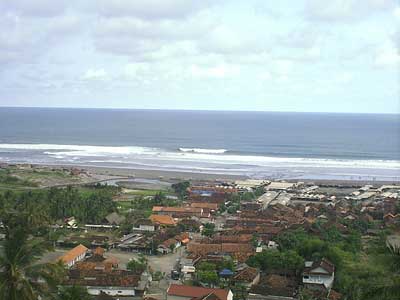
A popular seaside resort 27 kms south of Yogyakarta on the Indian Oceans, Parang Tritis is famous in Javanese mythology as the home of the Goddes of The South Seas, who was married to Panembahan Senopati, founder the Mataram Kingdom. Every year the sultans of Yogyakarta make special offerings to her in a beachside ceremony called” Labuhan”.

The naming of the beach has its own history. Hundreds years ago, someone named Dipokusumo, who was a fugitive of Majapahit Kingdom, came to this area to meditate. When he saw water dripping from the crack of the coral reef, he named this area 'parangtritis', originating from the word parang (stone) and tumaritis (water drops). The beach close to the area was then named the same.

October 18, 2010

Kaliurang


Kaliurang is located about 28 kms northside Yogyakarta. This area has a beautiful scenery that made Kaliurang become a pleasant escape from the city, this resort on the slopes of Mount Merapi is surrounded by enchating countryside. The tourists can walk to National Park of Kaliurang to get the best view of Mount Merapi when the tourists get to Promojiwo or 15 minutes walking in Kaliurang National Park, also can see the water fall which called “Tlogo Muncar”.

Yogya

Lying in the shadow of the aptly named "Fire Mountain", (2914 meter-high active volcano, Mt. Merapi), is the seat of the once mighty Javanese Empire of Mataram, Ngayogyakarto Hadiningrat. Yogyakarta (Yogya) came into being in 1755, when a land dispute split the power of Mataram into the Sultanates of Yogyakarta and Surakarta (Solo). Prince Mangkubumi built Kraton of Yogyakarta and created one of the most powerful Javanese states ever. The Kraton is still the hub of Yogyakarta's traditional life and despite the advances of the 20th century, it still radiates the spirit of refinement which has been the hallmark of its art and people for centures.


Prambanan Temple


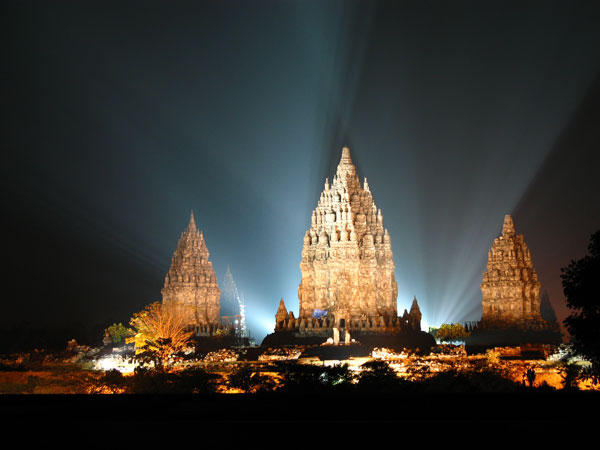
Prambanan temple located about 17 kms from yogya and its north side the main road from Yogyakarta to Surakarta. It also visible from that road. Prambanan temple is built by King Balitung Maha Sambu from Sanjaya Dynasty in the middle of the 9th century. This temple as knowns as Roro Jongrang Temple by locally, because there is a legend for this temple. The legend started when a guy whose name Bandung Bondowoso falling in love with Roro Jongrang, but she didn’t love him, then she asked Bandung to build 1000 temples in one nights. But when the temple had been built 999, Roro Jongrang cheated, she lighted fire that made chicken crowed sign the morning. Finally Bandung cursed Roro jongrang become a statue equip 1.000 temples.

Ngayogyakarta Hadiningrat Palace


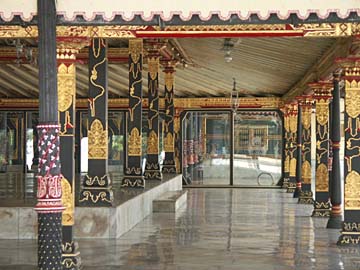
Ngayogyakarta Hadiningrat Palace was founded after the 1756 Treaty Giyanti by Prince Mangkubumi (Hamengkubumi I) as the center of the kingdom Ngayogyakarta. At first, the location of the Palace is now a swamp area called Bannerman Pacethokan, which later developed into a pesanggrahan Ayodya.


As with building the palace in the kingdoms of Java generally, Sultan's Palace was built facing north. Building a castle's outer palace made of red bricks with a thickness of about 4 meters. The fort is encircled palace as far as 4 kilometers square, and form a rectangle with some of the main gate (regol). Composition Kraton building successively from north to south: North Square (including Siti Hinggil and Exhibition Hall), Kemandungan Lor (north) or Keben, Sri Manganti, Palace as the main building, Kemagangan, Kemandungan South (south), and last at South Square. In the days of empire, North Square used to collect soldiers and people, as well as used for traditional ceremonies such as Grebeg, Sekaten, and others. The existence of this square symbolizes menunggalnya king with people in building the kingdom. In the middle of the square there are two banyan tree symbolizes that the Sultan is the patron and guidance as its people.