Showing posts with label Central Java. Show all posts

October 31, 2010

Surakarta Sultanate Palace


In the reign of Sinuhun Pakubuwana II (1726-1749), Sultan Kartasura precisely moved to Solo on February 17, 1745. New royal palace in Solo was named Kraton Surakarta Sultanate. Surakarta Sultanate Palace is a palace Kasunanan Surakarta. This is the last royal palace Palace Kingdom of Mataram, was established in the village of Sala (Solo), a small port on the west bank Bengawan (river) Concrete / Solo. After the official palace of the kingdom of Mataram was completed, the village name was changed to Surakarta Sultanate. The palace was also a silent witness to the transfer of sovereignty by Susuhunan Pakubuwono Mataram Kingdom II to the VOC in the year 1749. After the Treaty of Surakarta December 11, 1749.


Palace (Palace) in Surakarta is one of the exotic buildings in his time. One architect of this palace is Prince Mangkubumi (holding the title of Sultan Hamengkubuwono I) which is also the main architect of Sultan Palace. Therefore it is not surprising that the basic pattern of the second spatial palace (the Yogyakarta and Surakarta), many have a general equation.

Keraton Surakarta as can be witnessed today was not built simultaneously in 1744-1745, but was built in stages by maintaining basic spatial patterns that remain the same as initially. Development and large-scale restoration recently performed by Susuhunan Pakubuwono X (Sunan PB X) who reigns from 1893 to 1939. Most of the palace is nuanced white and blue with a mixture of Javanese-style architecture of Europe.

Dieng Plateau

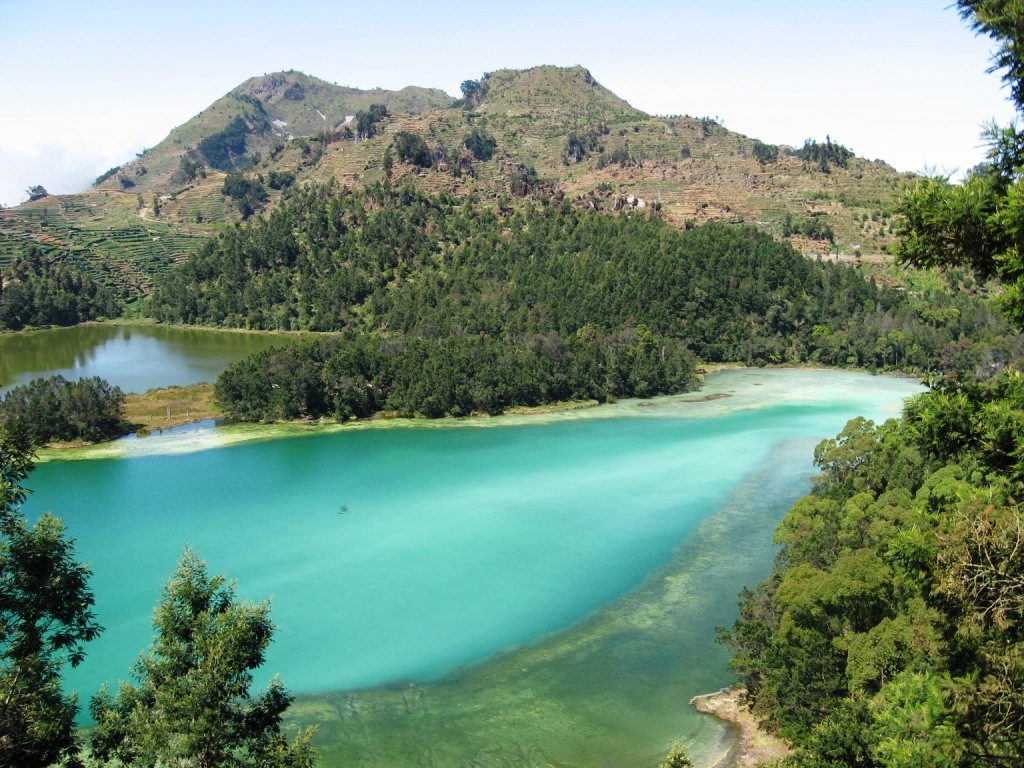
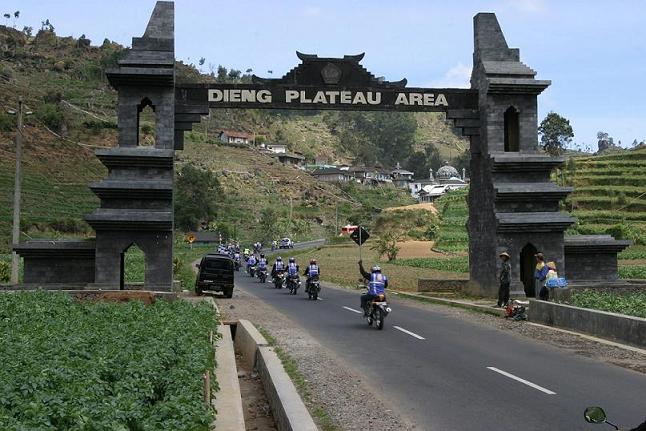
 Dieng is a plateau in Central Java, who entered the district of Banjarnegara and Wonosobo regency. It lies to the west of Mount Sindoro complex and Sumbing.


Dieng is an active volcanic area and it can be said is a giant volcano. Crater craters are often found there. The average altitude is about 2,000 m. above sea level. Dieng cool temperatures in winter approached, ranging from 15-20 ° C in the daytime and 10 ° C at night. In the dry season (July and August), air temperature can sometimes reach 0 ° C in the morning and bring frost by the locals who called the poison bun ("dew poison") because it causes damage to agricultural crops.

Dieng name comes from a combination of two ancient Sundanese words: "in" which means "place" or "mountain" and "Hyang" which means (God). Thus, Dieng mean mountain areas where the gods and goddesses residing. The name comes from the Sundanese Dieng as predicted in pre-Medang around the year 600 AD the area was under the influence of the Kingdom Galuh politics.


Borobudur Temple

Borobudur Temple from side

Borobudur is the largest Buddhist temple in the 9th century measuring 123 x 123 meters. Borobudur was completed centuries before Angkor Wat in Cambodia. This Buddhist temple has 1460 relief panels and 504 Buddha effigies in the complex. Millions of people are yearning to visit the buildings included in this World Wonder Heritages.


Borobudur was built by King Samaratungga, one of the kings of Old Mataram Kingdom, Dynasty descendant dynasty. Based Kayumwungan inscription, an Indonesian named Hudaya Kandahjaya revealed that Borobudur is a place of worship was completed on 26 May 824, almost a hundred years from the time the construction. Architects who contributed to build this temple according to a story passed down through generations named Gunadharma.