Thousand Islands National Park (Taman Nasional Kepulauan Seribu) is one of the representatives of marine nature conservation area in Indonesia is located approximately 45 km north of Jakarta.
There are 78 large-small island with a height of not more than three meters above sea level., And it is a group of islands reefs.
In hundreds of years ago, the islands were formed on top of coral colonies of coral animals are already dead. The colony was initially grown on the shallow sea floor, and the upper layer of the surface and experienced weathering. Then on top of the rock land, growing pioneer species of shrubs, trees and there was some kind of land. The land is on islands are not the same as land which consists of land. Likewise, the wealth of plants and satwanya.
Showing posts with label Jakarta. Show all posts
October 22, 2010
Jakarta
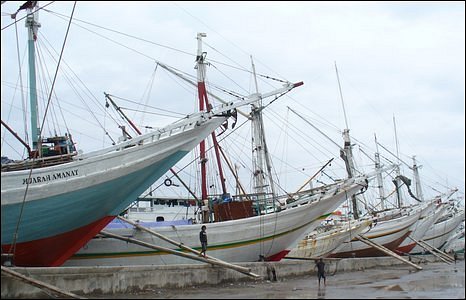
Jakarta was first known as one of the port of Sunda kingdom called Sunda Kelapa, located at the mouth of Ciliwung River. The capital of the Kingdom of Sunda, known as Dayeuh Pakuan Pajajaran or Pajajaran (now Bogor) can be reached from the port of Sunda Kalapa a two-day trip. According to Portuguese sources, Sundanese Kalapa is one owned by the Kingdom of Sunda port other than port of Banten, helter, Cigede, Tamgara and Cimanuk.Sunda Kalapa that in this text called Kalapa considered to harbor the most important because it can be reached from the capital of the kingdom which is called by the name Dayo (in modern Sundanese: Dayeuh which means the capital city) within two days.Kingdom of Sunda itself is a continuation of the Kingdom Tarumanagara in the 5th century, so this port is estimated to have existed since the 5th century and is the capital city is estimated Tarumanagara called Sundapura.
Sunda Kelapa Harbor
![]() |
| Sunda Kelapa in The Evening |
The history of the city is closely connected with the port city of Sunda Kelapa as their origins. Port city in the Bay of Jakarta, the Ciliwung river estuary, is a very important trading center since the 12th century until the 16th century. At that time the port was already known as a busy port of pepper last Hindu kingdom in West Java, Pajajaran, located near the city of Bogor now. Foreign ships coming from China, Japan, South Indian, and Arabic is already docked at the port carrying goods such as porcelain, coffee, silk fabrics, perfumes, horses, wine, and dyes in exchange for spices the wealth of the homeland at that time.
October 19, 2010
National Museum of the Republic of Indonesia (Museum Gajah)

National Museum of the Republic of Indonesia is one manifestation of European influence, especially the spirit of the Enlightenment, which emerged at about the 18th century. This building was built in 1862 by the Dutch Government under Governor-General JCM Radermacher in response to the association Bataviaasch Genootschap van Kunsten en Wetenschappen which aims to examine the scientific research in the Netherlands East Indies. The museum was inaugurated in 1868, but the institutional forerunner of this museum was born in 1778, when the formation of Bataviaasch Genootschap van Kunsten en Wetenschappen by the Dutch government.
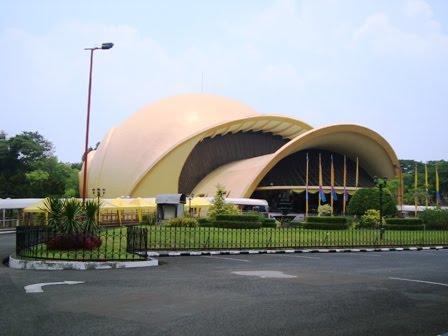
Taman Mini Indonesia Indah (Beautiful Indonesia in Miniature Park)

Taman Mini Indonesia Indah (Beautiful Indonesia in Miniature Park) is Indonesia's answer to every visitor's prayer to see the magnificent archipelago in just one day. An extensive park to get a glimpse of the diverseness of the Indonesian archipelago, it represents Indonesia's 27 provinces and their outstanding characteristics, reflected most strikingly in the exact regional architecture of the province. An extensive theme park set in over 100 hectares on the outskirts of Jakarta; the All Indonesian islands are realistically reproduced in miniature in a central lake and around the lakes, there are pavilions. Each pavilions is representative of each province firm the traditional architectural style in miniature to a wonderful display of cultural items and exhibits. The park's centerpiece is a beautiful artificial lake. The complex was the brainchild of Madam Tien Soeharto, the late Indonesian first lady.
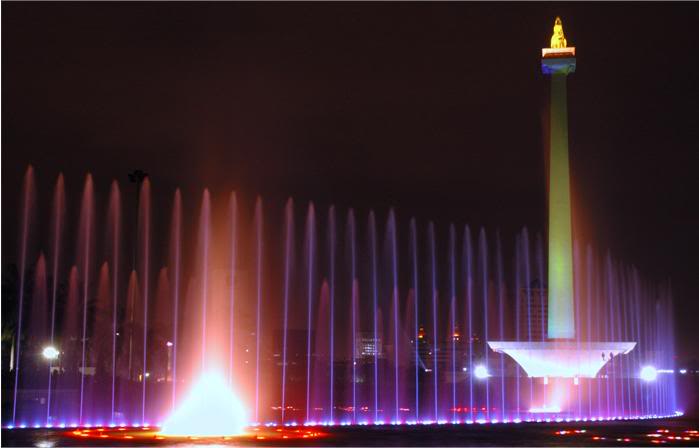
National Monument ("Monas")

The National Monument, or "Monas" as it is popularly called, is one of the monuments built during the Sukarno era of fierce nationalism. The top of the National Monument (Monas) is Freedom Square. It stands for the people's determination to achieve freedom and the crowning of their efforts in the Proclamation of Independence in August 1945. The 137-meter tall marble obelisk is topped with a flame coated with 35 kg of gold. The base houses a historical museum and a hall for meditations. The monument is open to the public and upon request the lift can carry visitors to the top, which offers a bird's eye view on the city and the sea.
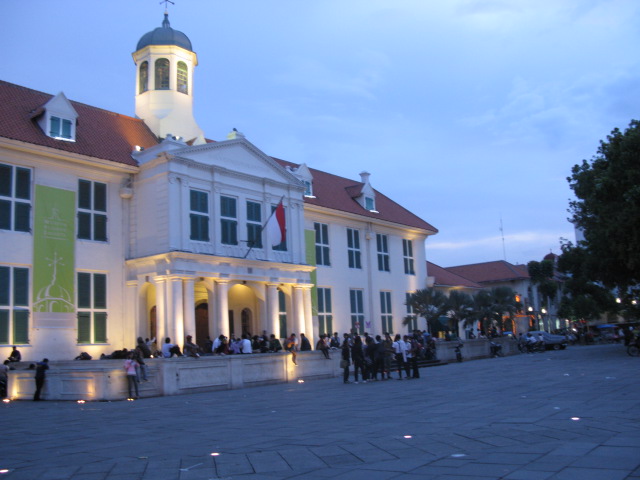
Kota Tua Jakarta, Jakarta Old City
The old city area in Jakarta was built by Jan Pieterszoon Coen a governor general of the VOC in 1619 and the buildings are now used as the Museum include:
- Fatahillah Museum which was formerly the city hall (staadhuis), administrative center of the VOC in Batavia, Jakarta City History Museum where we can see many of the inscriptions, as well as an underground prison that still looks sturdy and well maintained.
- Puppet Museum Collection contains thousands of types of puppets from all over Indonesia and some from other countries such as Malaysia, Surinam, French Cambodia, India, Pakistan, Vietnam, England, United States, and Thailand including traditional equipment that is usually complete puppet show.
- Museum of Fine Arts and Ceramics building that was once the Court (Raad van Justitle) containing a variety of ceramics from the ancient to modern.
- Museum Bank Mandiri and Bank Indonesia contains about history perbankkan across Indonesia, Bank Mandiri, the museum building was formerly the Dutch trade office that developed into a company perbankkan.
Subscribe to:
Posts (Atom)